What do you feel reading the word, ADDICTED?
Fear? Contempt? Anger? Loathing?
Many things can lead to an addiction:
- alcohol
- cocaine
- Oxycontin
- caffeine
- Ritalin
- Adderall
- morphine
- hydromorphone
- methadone
- codeine
- Meth
- nicotine
- Heroin
- Valium
- Ativan
- phenobarbitol
- Ambien
- Lunesta
- Vicodin
- Lyrica
Honestly, the full list is actually very long. The point is there are hundreds of addictive substances, some legal and some not.
Let’s chat.
Addiction, according to Merriam-Webster, is ‘a compulsive, chronic, physiological or psychological need for a habit-forming substance, behavior, or activity having harmful physical, psychological, or social effects and typically causing well-defined symptoms (such as anxiety, irritability, tremors, or nausea) upon withdrawal or abstinence.’1
That’s wordy. Let’s try plain English.
Addiction is anything that cannot be stopped that should be stopped because it hurts you and those who care about you. – me
Is it a disease, a genetic trait, a trained habit, or a chemical imbalance?
Or is it a character flaw?
Here the party generally splits between those who have been affected by addiction, yet do not suffer from one; and those who are addicted.
- Those affected but not addicted very often blame the person for the addiction labeling character flaw as the most likely culprit.
- The other camp, those who are addicted, tend to find anything except themselves to blame.
Who’s right?
Let me introduce you to dopamine.
Dopamine is a neurotransmitter. A neurotransmitter changes how nerves respond. This chemical we produce affects our entire bodies in multiple ways.
Neurotransmitter?
Imagine a game where everyone is holding onto different ropes and all of these ropes are interconnected. So you’re standing, or sitting, or lying there, with a rope in each hand. You may have a few strings tied to each of your toes and fingers too. You are now a nerve cell.
Each string, or rope, has a different thickness and goes to different places. Each to another person similarly attired.
What would happen if someone moved? You might feel it if it was a thick rope but, maybe, not so much from the tiny strands.
What then, if someone kept on moving an arm and kept pulling and pulling? Would you feel it then? Would it be easier to feel?
Nerves are like this. They are interconnected, each ‘talking’ to the others around them.
Imagine now, there’s a fire on one end of the group. How long would it take for the other end of the group to know something was wrong? Pretty quick, I think.
Here we have multiple people pulling multiple ropes all at the same time. This then flows quickly to the opposite end of the group. The signal is strong and the group knows to act and to act quickly.
What controls all this in the brain and body? Neurotransmitters. The neurotransmitters are chemicals that flood the different neurons (nerve cells) causing something to happen. A lot of neurotransmitter; a lot of response. A little neurotransmitter; a small response.
If the signal is small, the response will be small.
If the signal is large, the response will be large.
Dopamine is one of these neurotransmitters. Dopamine becomes norepinephrine which then becomes epinephrine. Each is active in its own way and all three are neurotransmitters. Remember, neurotransmitters are the way neurons (nerve cells) communicate with each other.
Dopamine affects:2
- pleasure
- satisfaction
- motivation
- memory
- mood
- sleep
- learning
- concentration
- movement
Norepinephrine affects:3
- ‘fight or flight’ response
- dilates pupils (see better)
- opens bronchioles (breathe better)
- increases heart rate
- increases blood pressure
- stops digestion
- Metabolically
- increases the breakdown of stored glucose (more available energy)
- reduces the storing of glucose (more available energy)
- Mentally
- awakens
- arouses
- increases sensitivity
- Everything that norepinephrine does but stronger.
- Increases breathing rate
- Increases the heart’s strength and ability to pump blood faster
- Increases blood flow
- Stops histamine being released (reduces the effect of an allergic reaction)
What does all of this have to do with addiction?
Whether by accident, purposeful acquisition, or medically necessary, a person receives a spike of dopamine.
This spike may be from something as common as sex, chocolate cake, caffeine, winning a slot game, having a gin and tonic, or smoking your first cigarette. It might be from taking your first hit of cocaine, ketamine, Kratom, LSD, or MDMA.
The dopamine spike might come innocently enough through an IV at the hospital that finally relieves your pain, or the medication you’re prescribed afterward. It may even come from the daily necessary medications you use to help you get along in the world. Morphine, Oxycontin, Ritalin, Zoloft, and Neurontin all have warnings of potential addiction.
Whatever the instigator, your dopamine spikes and this feels good. This pleasure creates a reward. The reward mechanism given us through evolution creates a perfect storm. The human is rewarded for having, taking, or trying something and, therefore, does it again. From this mechanism we have learned to eat the right berries, procreate, create tribes, build homes, learn math, study the stars… everything we do is either rewarded or punished.
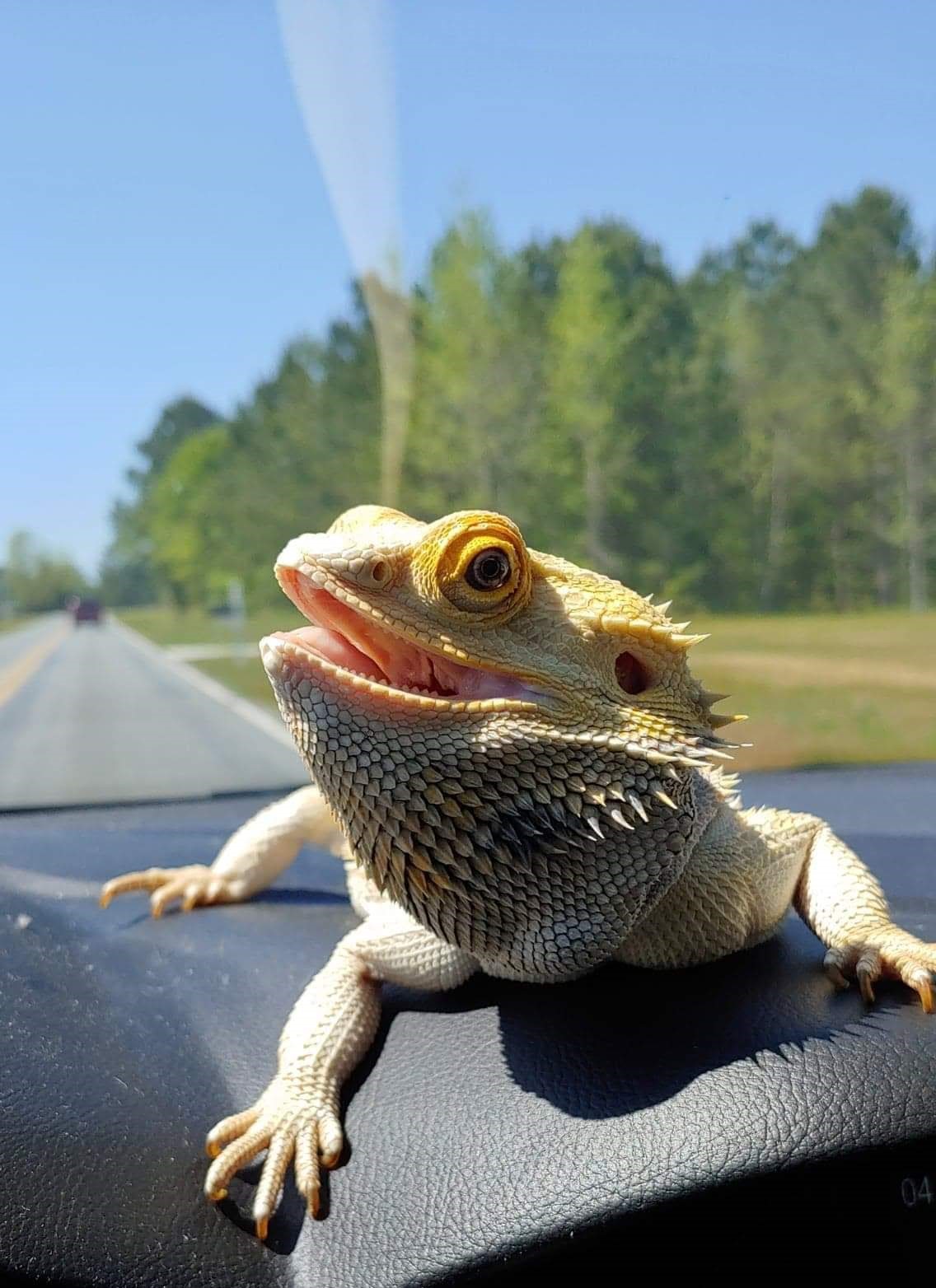
It’s simple, we’re animals, just like Liz in the picture. We want more reward and less punishment. We seek rewards to push our dopamine levels higher. Those becoming addicted continue to seek and seek.
As our bodies are continuously flooded with more dopamine, they attempt to protect us. The body is full of checks and balances. There is a preset level we all have, called homeostasis. This level is what our body is most happy maintaining. If more dopamine is made; more will be broken down. If more dopamine continues to be made; fewer places for it to react on other neurons are made available. If more dopamine continues our body will then work to remove as much as it possibly can as quickly as it possibly can. Our body wants to go back into homeostasis.
In one sense, if you are the nerve cell with the ropes and strings, your body has removed many of the strings and ropes thereby reducing the amount of response dopamine is able to produce.
But something happens. The person using the addictive dopamine-enhancing substance begins to discover the pleasant effects are less frequent and less intense. This can happen very quickly with cocaine.
With the physiological need for dopamine (we do actually need this to maintain life), the now addict must attempt to obtain more. The addiction cycle begins and the benefits continue to be reduced.
Now what? Maybe the person realizes this isn’t working, realizes they don’t like what is happening any more. Maybe they realize the substance just isn’t helping like it used to. Maybe they want to stop.
Great! Wonderful! Stopping is such a great idea. BUT there is a new problem.
Remember, the body has already become accustomed to high levels of dopamine. The body automatically removes dopamine quickly. The engineering the cells had to do to reduce the number of useful receptors for the excessive dopamine and to break down the dopamine quickly and efficiently has a new negative consequence. (It takes a long time to grow back the ropes and strings that have been cut. Sometimes these connections never grow back.)
The addict cannot function without the drug. Going cold turkey feels miserable. Any comparatively tiny amount of dopamine in the body is quickly removed and the addict suffers the consequences.
Too little dopamine leads to:
- frustration/anger
- discontent
- being unmotivated
- forgetful
- mood swings
- insomnia
- low retention
- inattention
- poor movement
While for most addictions the above list is survivable, there are some for which quitting cold turkey will kill you; specifically alcohol. All addictions can kill you as you level up the amount you use for the high you used to get. It may take more to help you feel what you are looking for, but the amount needed to kill you does not change nearly quickly enough. If the substance itself does not kill you, the damage it has done to your body over time undoubtedly will.
No one knows if an addiction will surface without having the substance that leads to it. Anyone can become addicted. It is likely, as well, that all of us are addicted to something in a similar manner.
 The Be Healthy Advantage